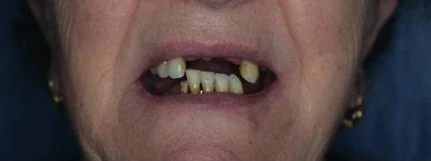
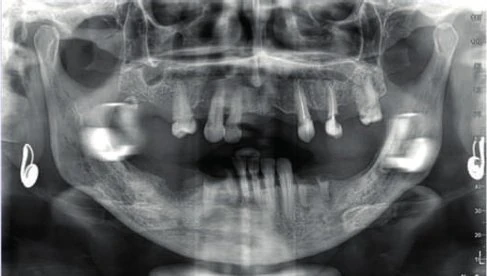
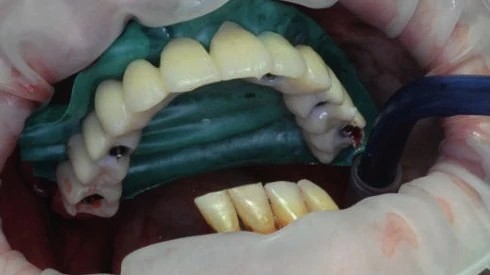
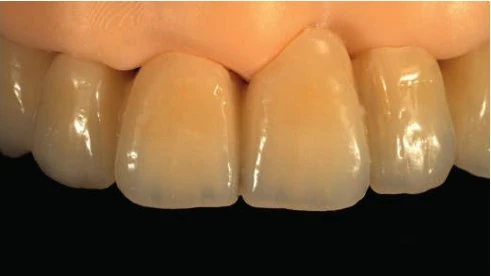
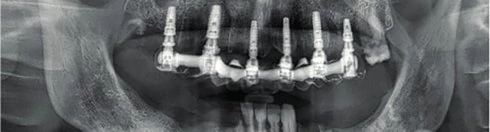
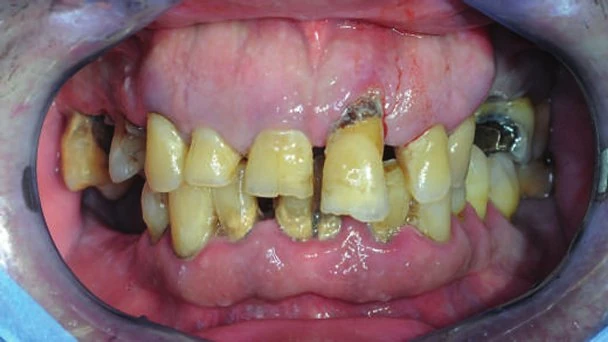
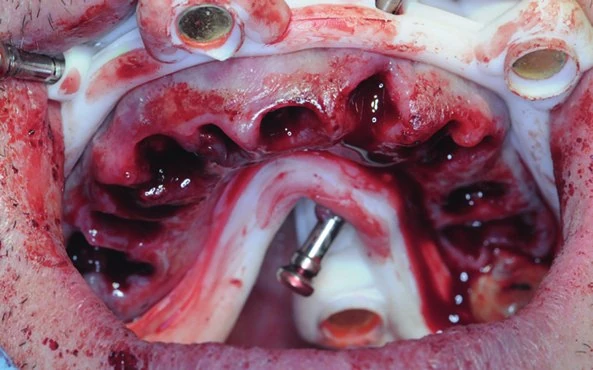
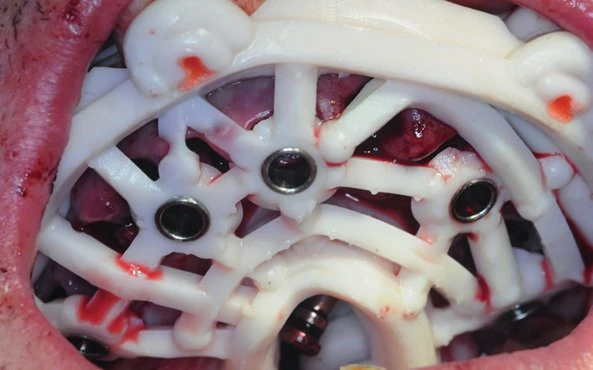
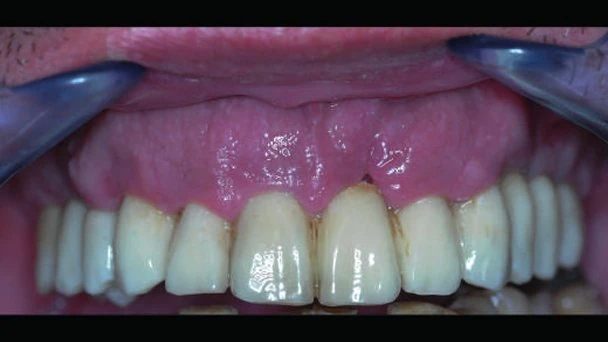
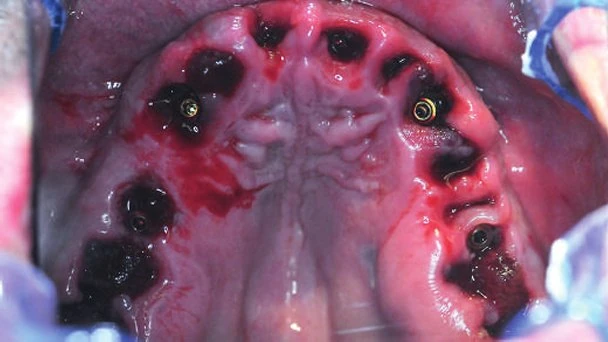
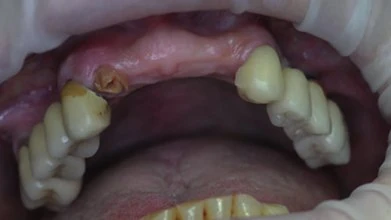
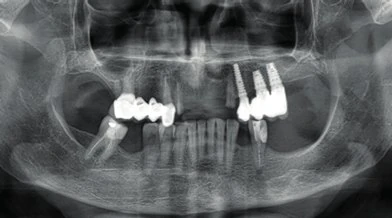
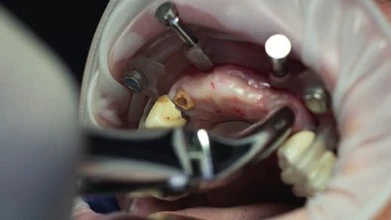
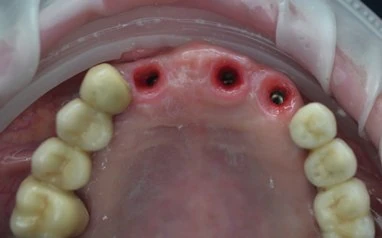
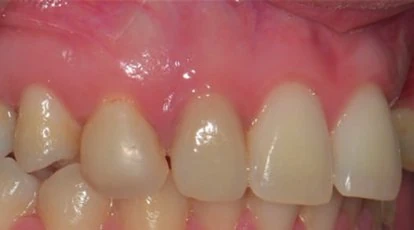
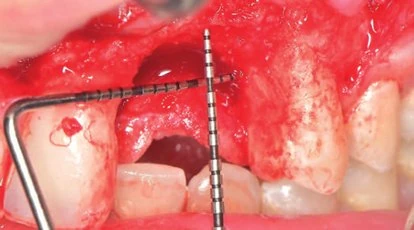
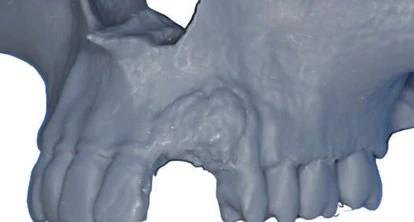
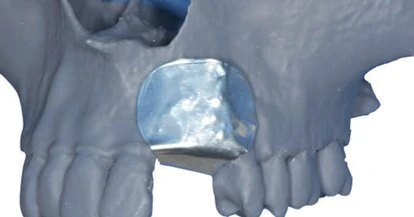
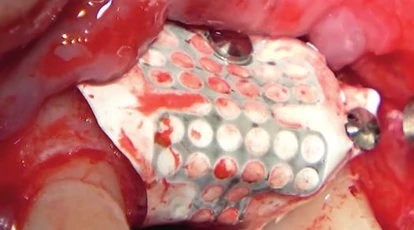
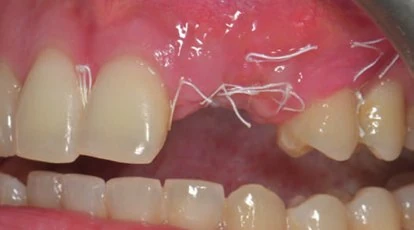
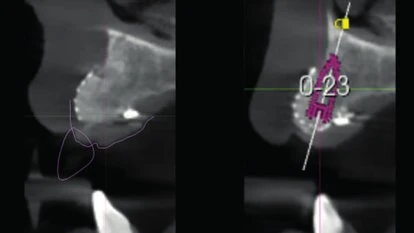
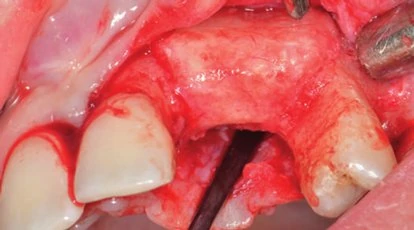
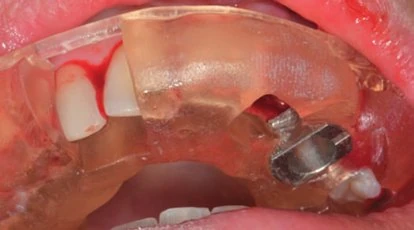
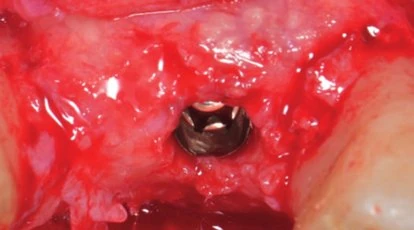
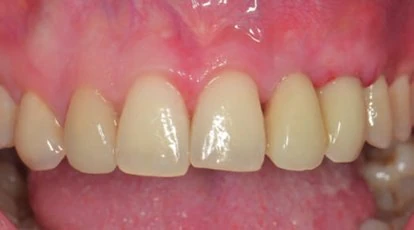
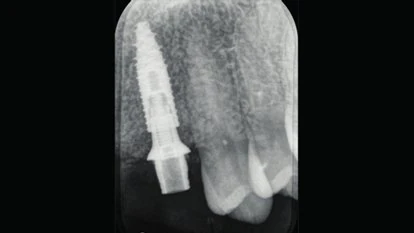
A 69-year-old woman in good general health presented with a severely compromised upper arch. Her clinical condition included multiple previous extractions, a residual denture damaged by extensive caries, several apical and periapical inflammatory processes, severe mobility of the remaining teeth, and a large area of palatal irritation caused by the removable prosthesis. Because of the resulting aesthetic and functional impairment, an implant-supported fixed rehabilitation was planned, with the upper arch treated as the first surgical phase.
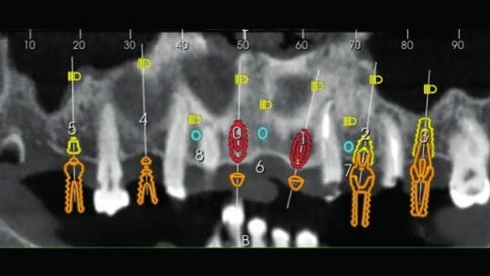
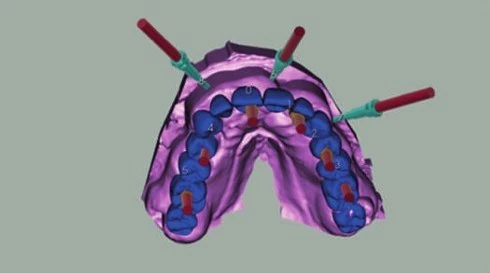
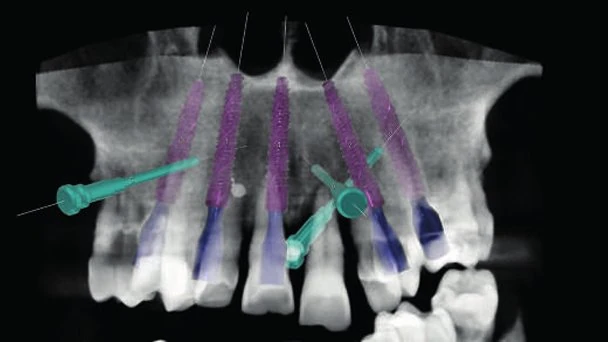
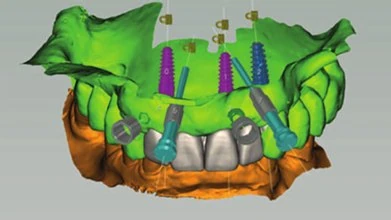
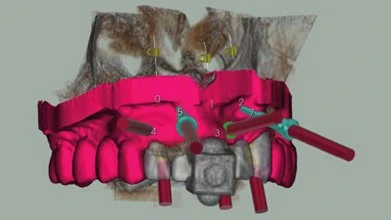
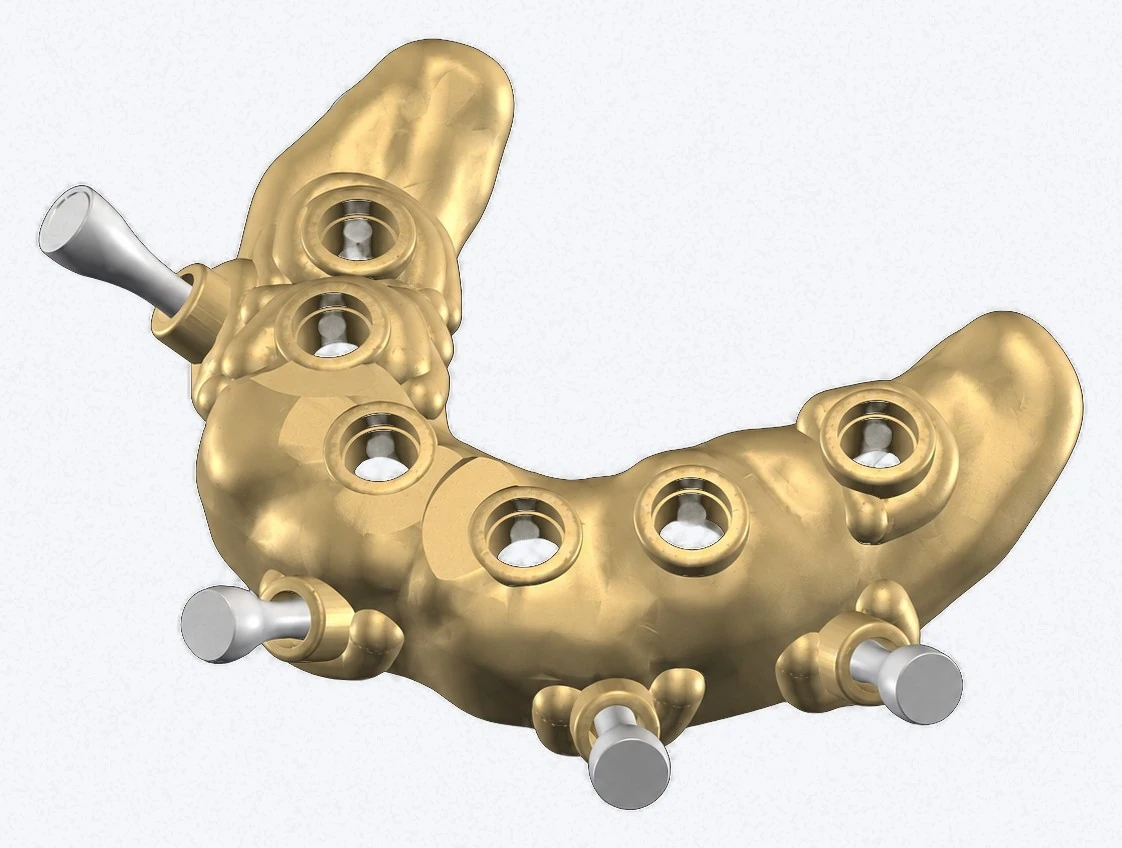
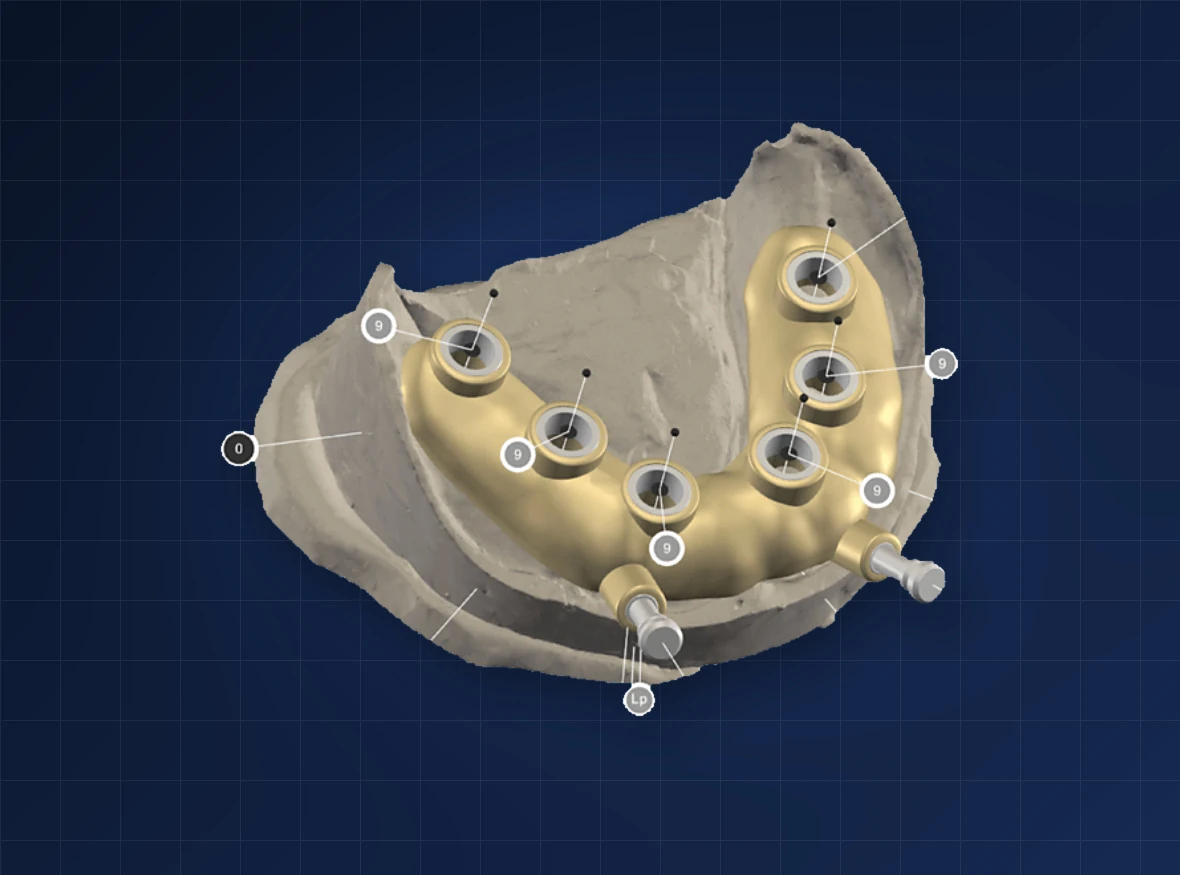
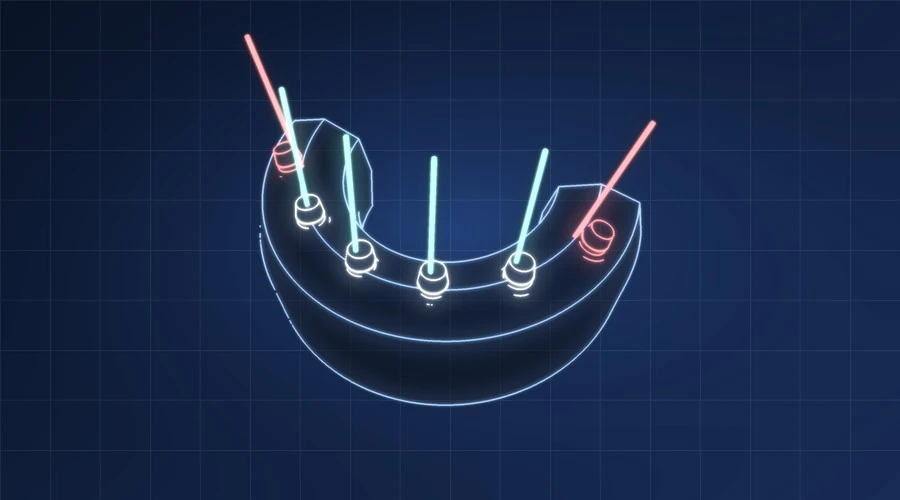
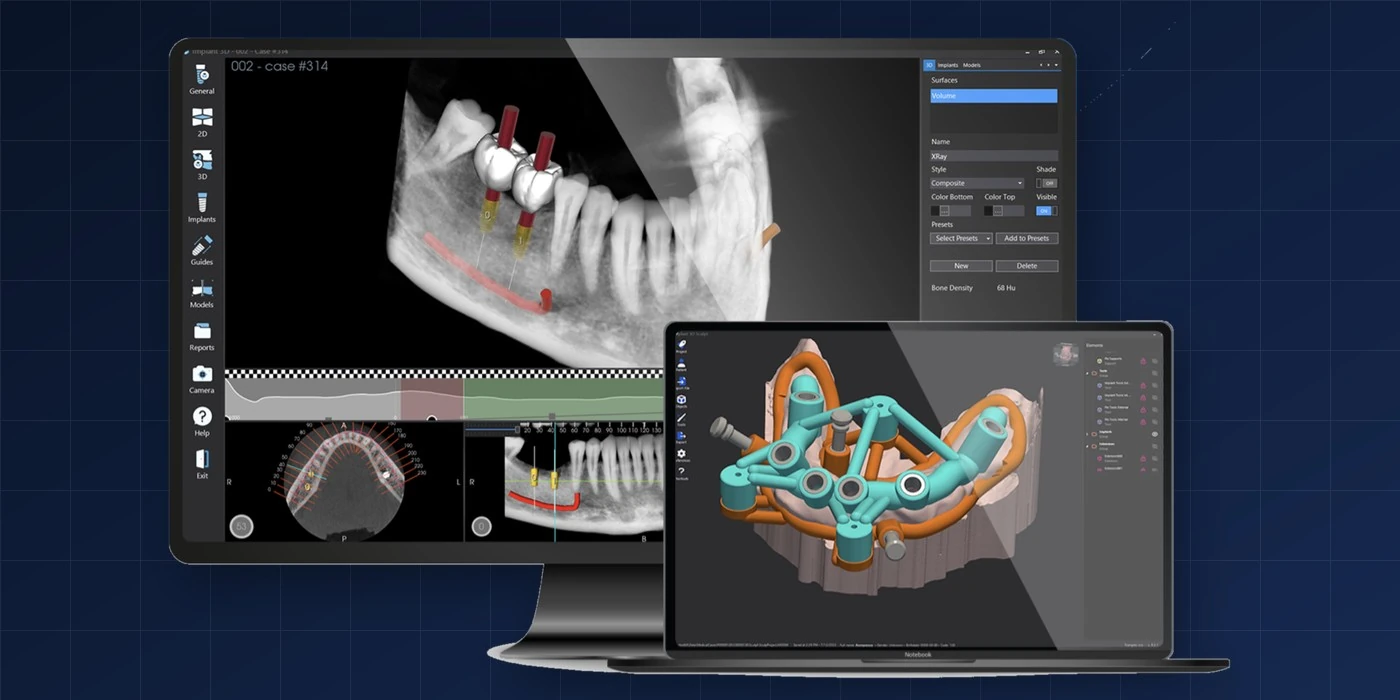
The digital workflow began by aligning the DICOM data with the STL files obtained from the intraoral scan. A diagnostic wax-up was imported into the guided-surgery software so that six implants could be planned according to the intended prosthetic result. The implant positions, dimensions, and prosthetic components were selected before surgery, and a preconstructed provisional restoration was incorporated into the treatment plan.
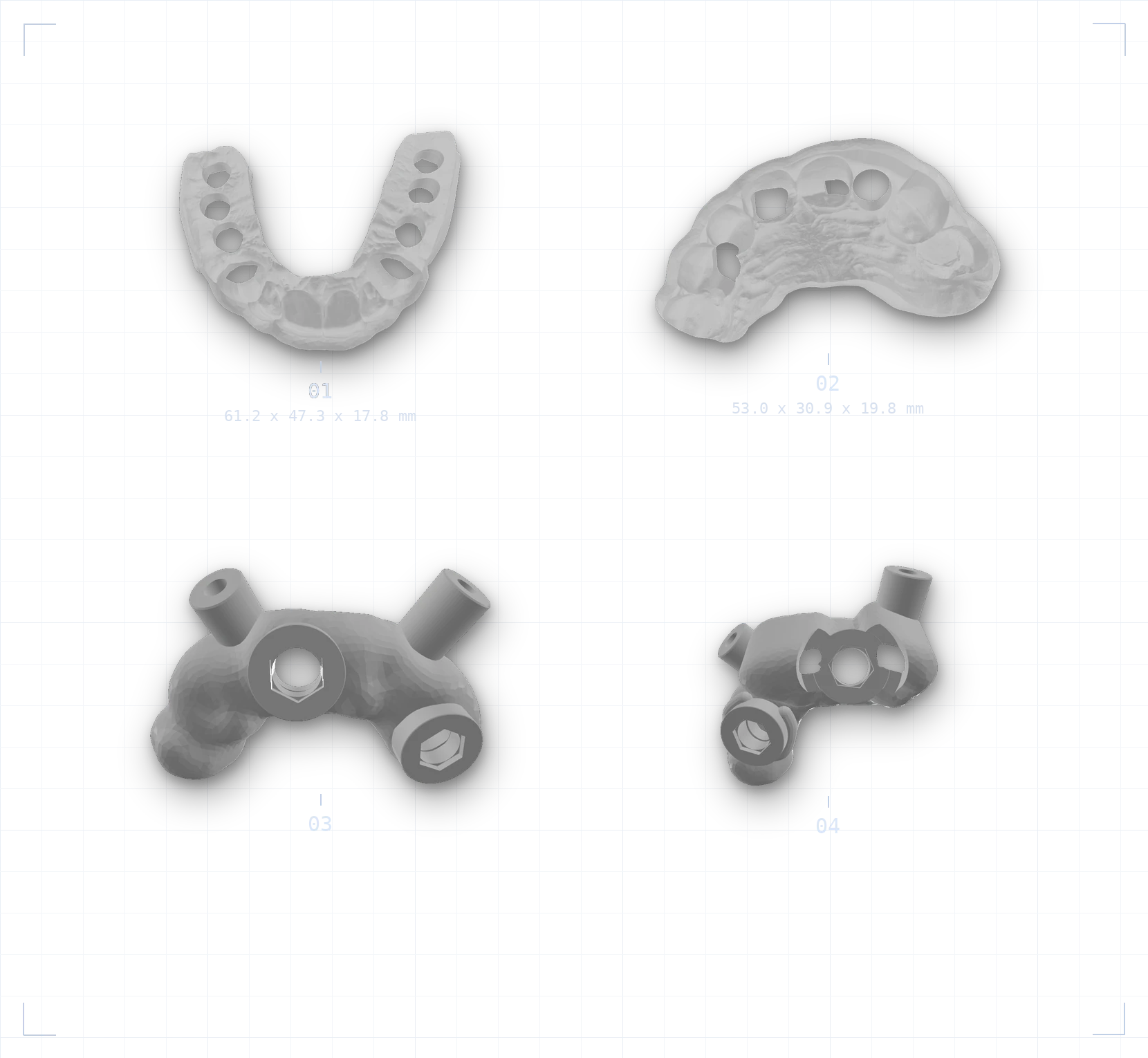
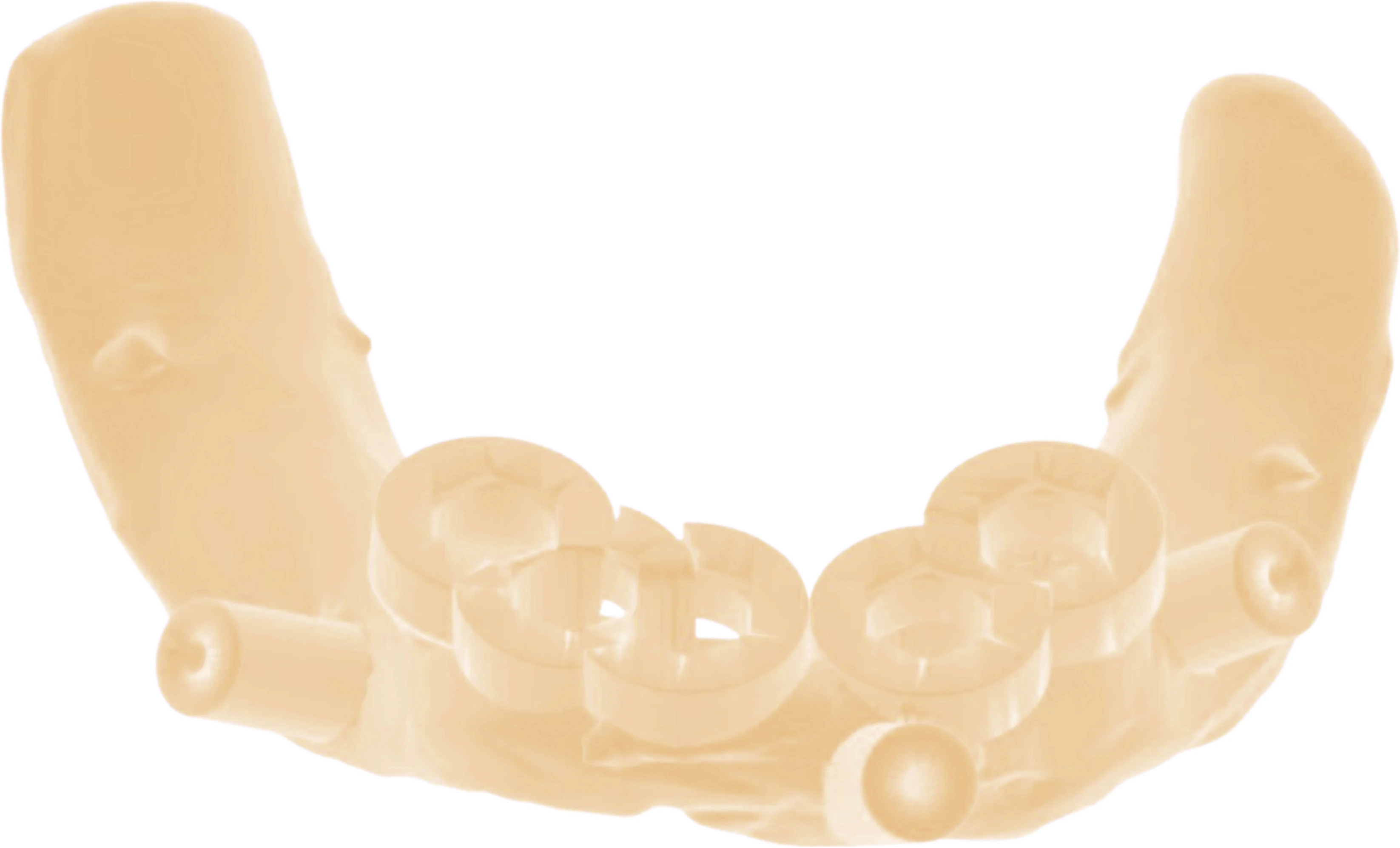
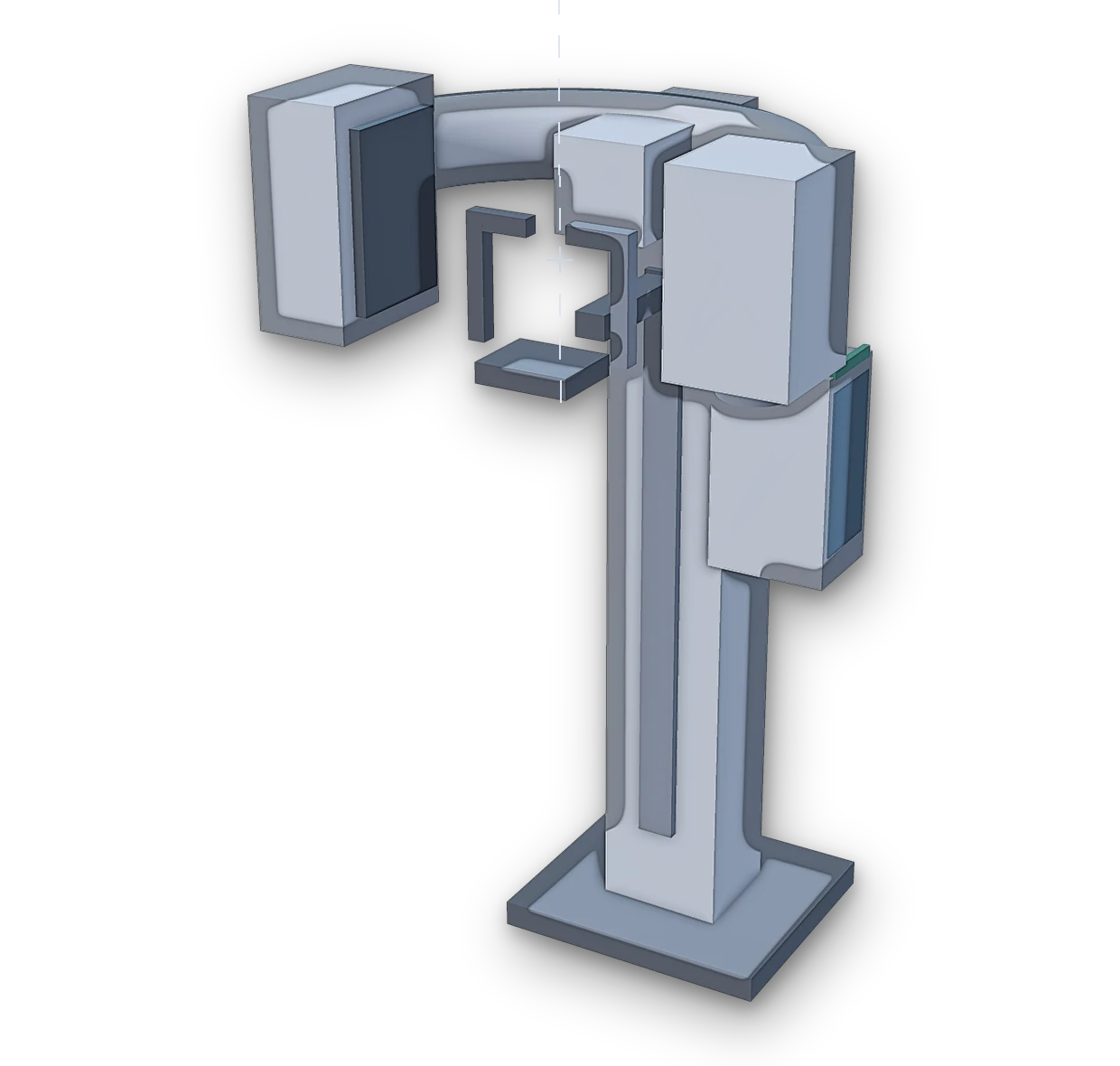
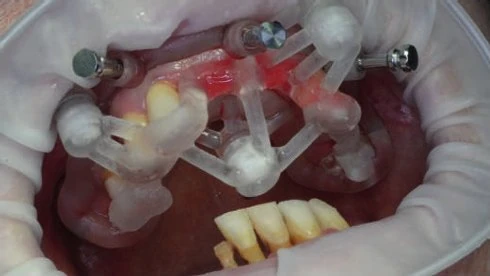
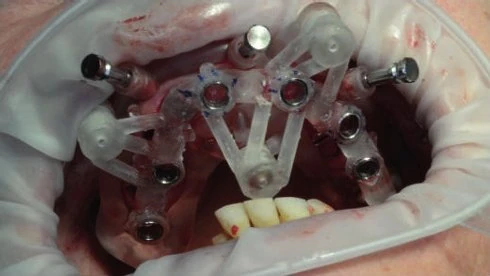
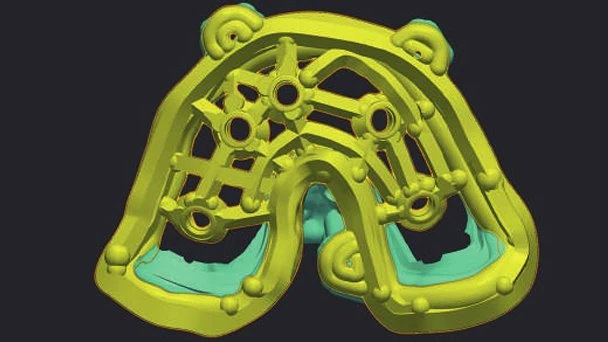
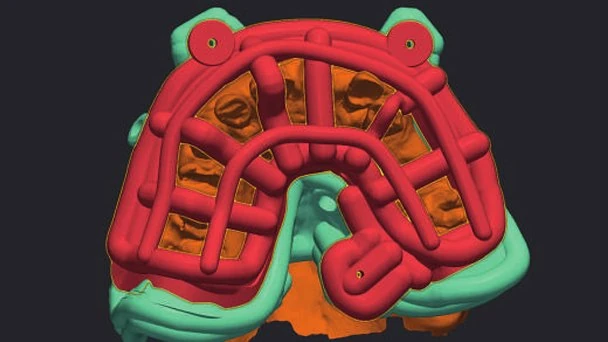
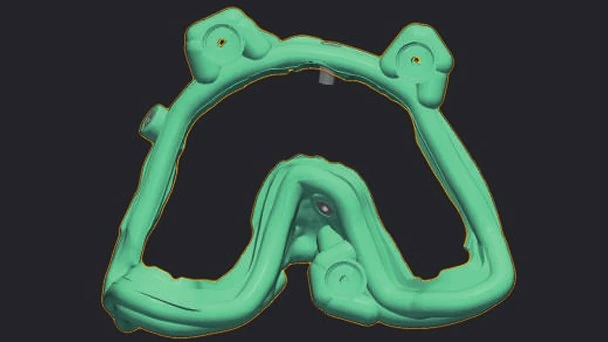
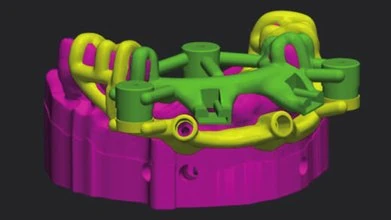
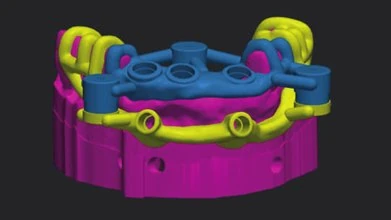
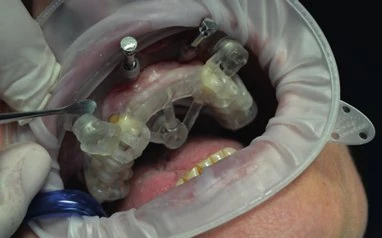
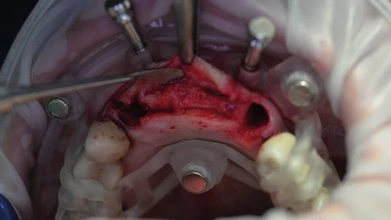
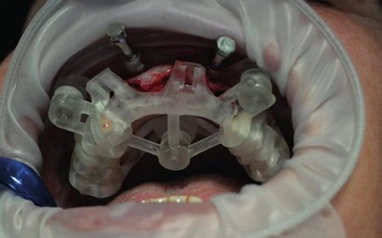
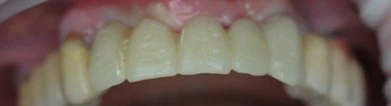
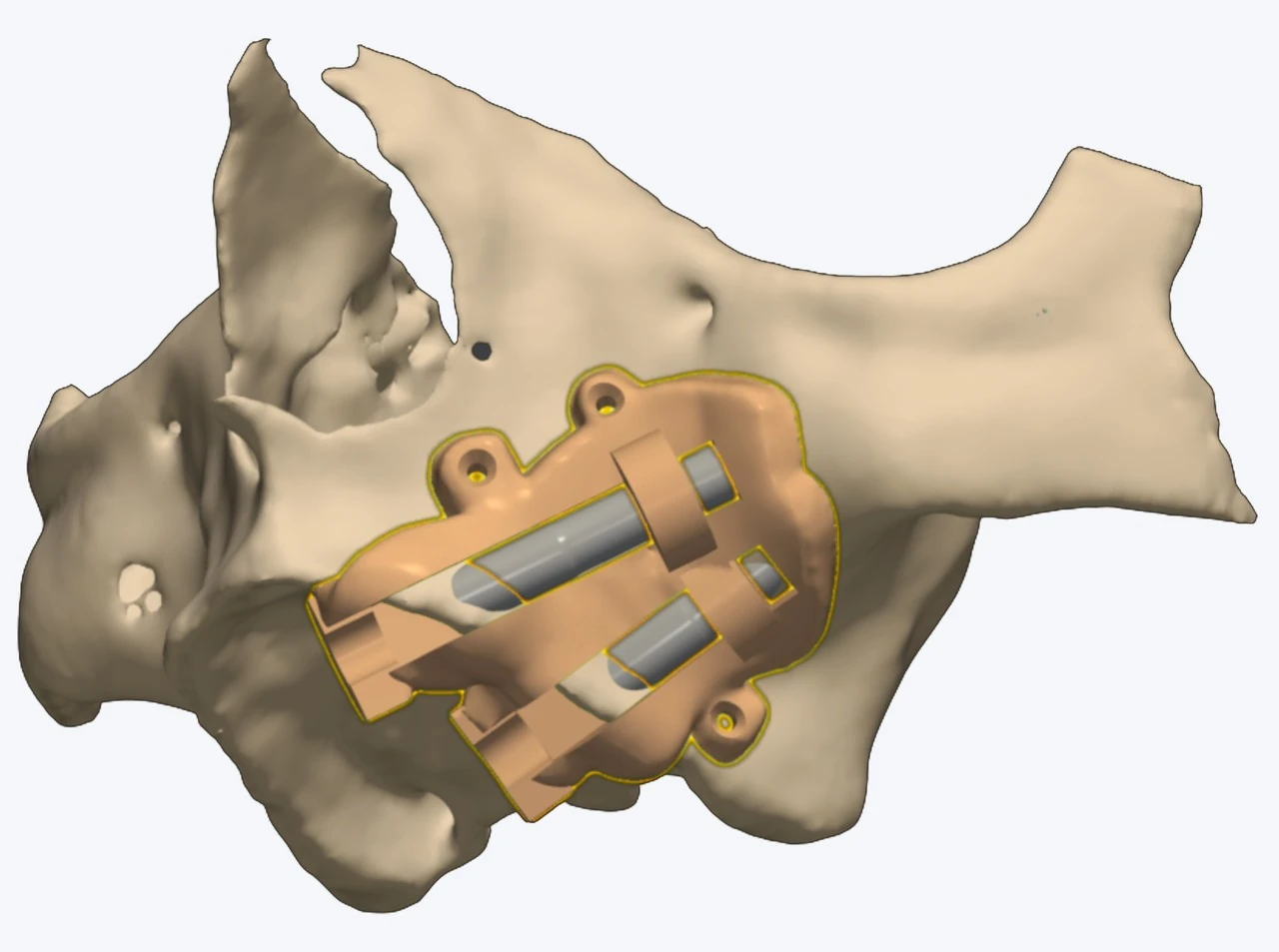
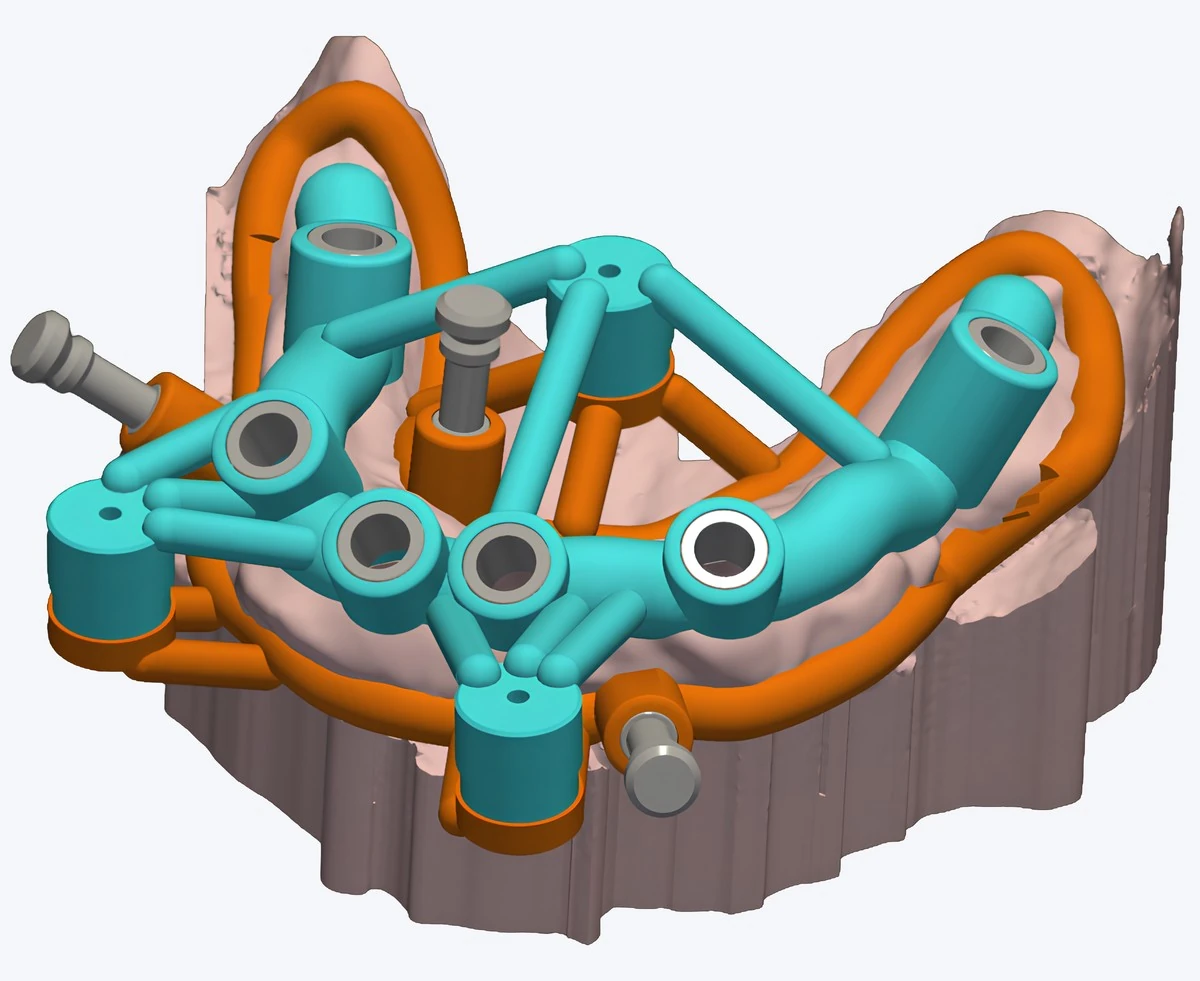
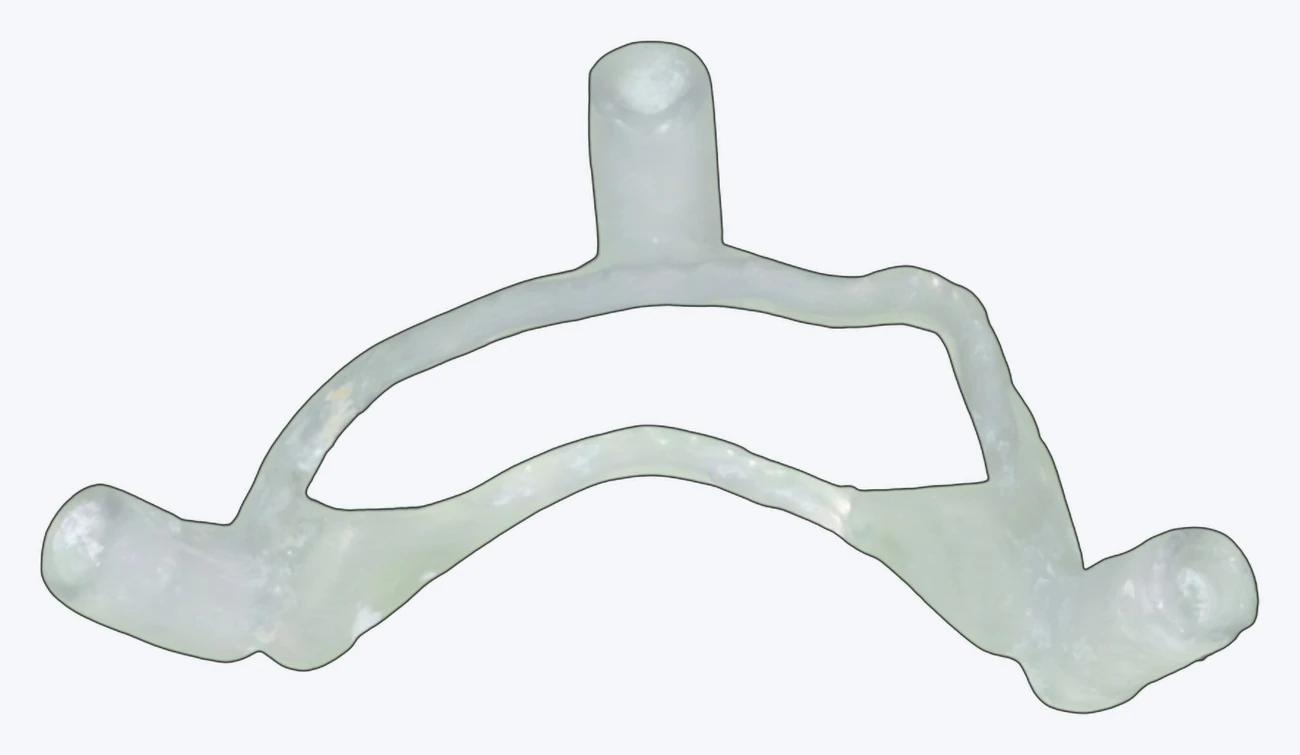
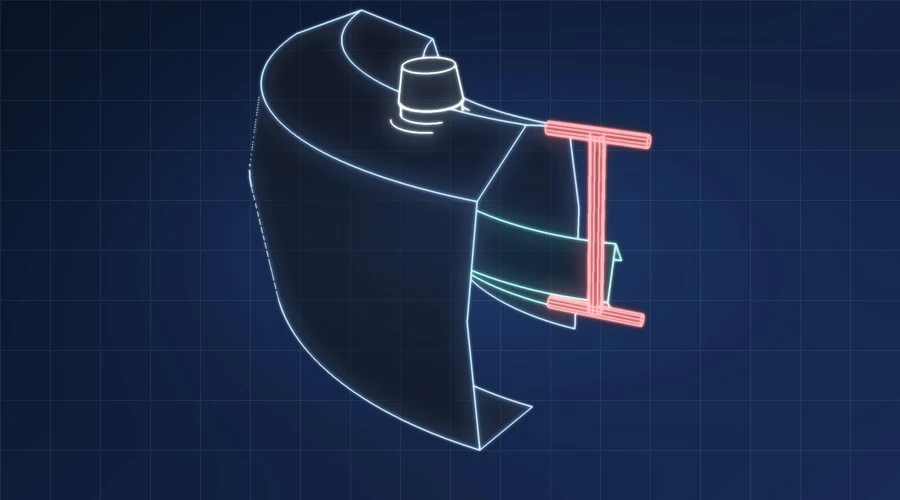
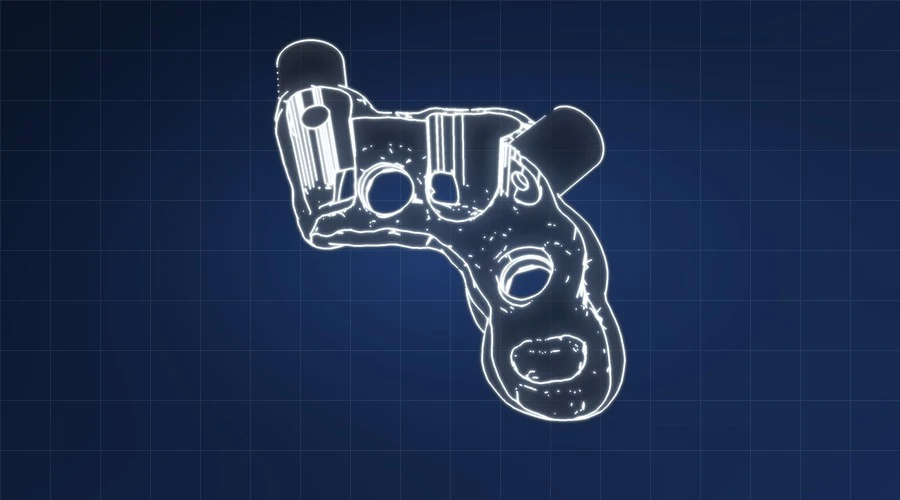
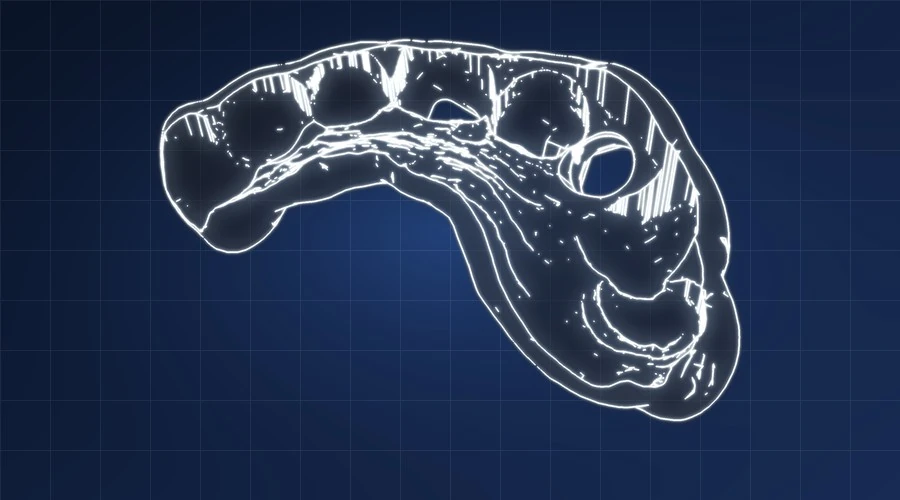
Using the SCULPT module, a sequence of predetermined templates was created for the extractions, limited osteoplasty, guided osteotomy preparation, implant insertion, and provisional restoration. A tooth-supported positioning guide established the location of an external base, which was stabilized with fixation pins and remained in place throughout the procedure. Magnetically coupled components were then exchanged in sequence while preserving the planned position. After guided implant placement and positioning of the prosthetic components, the prefabricated provisional restoration was connected at the end of the intervention.
This case demonstrates a complete digital and prosthetically driven workflow for full-arch immediate-load rehabilitation, from virtual planning and sequential guides to implant placement and delivery of the provisional restoration.